Park on a New San Diego Driveway at 7 Days, Not Sooner
- Walk on it after 24 hours. Give stamped concrete one more day.
- Bikes, scooters and skateboards can go on after 3 days.
- Your car can go on at 7 days. Keep the tires off the edges.
- RVs, boats, moving trucks and dumpsters wait 28 days.
- Keep the slab moist or covered with a curing coat for the first 5 to 7 days. On a dry Santa Ana week, that matters more than the date.
You're standing at the edge of your new driveway the morning after the pour. It looks dry. It feels hard when you tap it with your shoe. Your car is parked on the street and you'd like it back where it belongs.
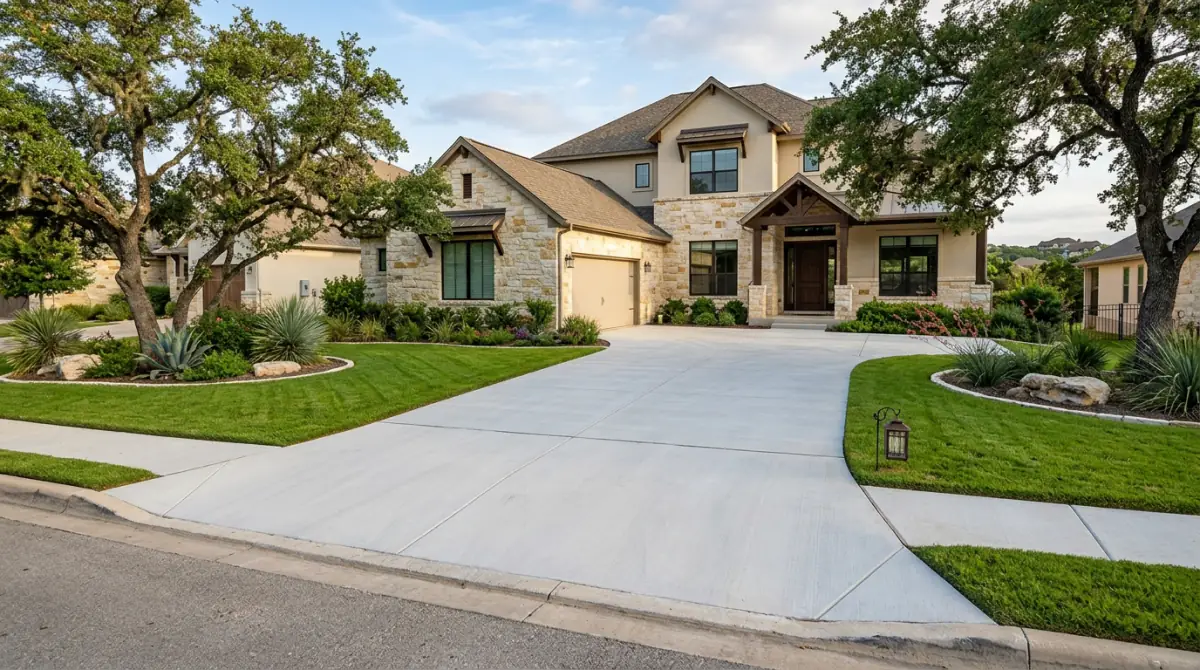
Wait a week. A car can roll onto most new home driveways at about 7 days, when the slab has close to 70 percent of the strength it will have at a month. A truck, an RV or a full dumpster should wait the full 28 days. And in San Diego, the weather in that first week can matter as much as the count.
The Day by Day Count for a New Slab
The times below come from the curing timeline published by Concrete Network. They assume normal ready mix concrete and mild weather. Your contractor may give you a longer count for a thick slab, a cold week or a special mix. Go with the longer number.
| Time after the pour | What can go on it | What to watch |
|---|---|---|
| First 24 hours | Nothing. No people, pets or wheels. | Footprints and paw prints stay for good |
| After 24 hours | Light foot traffic | Stamped work needs one more day |
| After 3 days | Bikes, scooters, skateboards | No dragging tools or trash cans |
| After 7 days | Cars and small SUVs | Stay off the edges and don't turn the wheel while parked |
| After 28 days | RVs, boats, moving trucks, dumpsters | Good time to talk about sealer |
The edges are the weak spot. A slab edge has no concrete on one side to share the load. So a tire that drops off the side, or rides right along the edge, puts more stress there than a tire in the middle. For the first few weeks, pull straight in and park in the center.
What the Concrete Is Doing While You Wait
Concrete does not dry hard like paint. It hardens because the cement reacts with the water in the mix. That reaction keeps going as long as there is water to feed it. The American Cement Association says most of the strength comes in the first month, and the longer concrete is kept moist, the stronger it gets.
You can watch that climb in the numbers makers publish. The data sheet for Quikrete 5000, a high early strength mix, lists 1,500 psi at 1 day, 2,500 psi at 3 days, 3,500 psi at 7 days and 5,000 psi at 28 days. That is 30, 50 and 70 percent of the final number at those three stops.
A regular bag mix climbs slower. The Quikrete Concrete Mix sheet lists 2,500 psi at 7 days and 4,000 psi at 28 days. That is about 63 percent at one week. Truck mix for a driveway is made to its own recipe, so ask what strength was ordered and what the supplier expects at 7 days.
So a car on day 7 is fine because the slab is strong enough to carry it without marks or cracks. A loaded moving truck on day 7 is a gamble. It is the same slab with less than three quarters of its strength.
San Diego Weather Changes the Count
Most curing advice is written for places with snow. Our problem is the opposite. San Diego rarely freezes, but it can dry out a new slab fast.
Start with heat. The National Weather Service climate study for San Diego puts the average downtown high at 65 degrees in late December and 78 degrees in late August. Average lows run from 48 degrees in December to 68 in August. The same study says the swing between day and night is about 15 degrees in the city, but 30 degrees or more a few miles inland.
Quikrete's curing advice uses two bands. Cure for 5 days when it's 70 degrees or warmer. Cure for 7 days when it's 50 to 70 degrees. Most of the year, a downtown or coastal slab sits in that second band, so plan on 7 days of curing. A winter pour inland, where nights drop lower, can need more time. Concrete Network notes that concrete cures best above 50 degrees.
Then there's wind. The weather service says Santa Ana winds blow mostly from October through February, with December the busiest month. That air comes down off the mountains warm and dry, with humidity in the teens. Readings under 5 percent have been recorded in the city.
Dry wind pulls water off the top of a slab. When the top dries before the rest, it can crack in a web of short lines. The Federal Highway Administration says to take steps against this kind of cracking once water leaves the surface at about 0.2 pounds per square foot per hour. Hot, dry, windy days get there quickly.
The good news is the marine layer. The weather service says humidity near 100 percent is normal on late nights and early mornings in spring and summer. A pour on a gray June morning starts life in damp air, which is kind to new concrete.
| Pour week | What happens to the slab | Ask your contractor |
|---|---|---|
| Gray marine layer morning | Damp air slows drying | Normal curing, 7 days |
| Hot late summer day, 70 degrees plus | Gains strength faster, dries faster | An early morning pour and a curing coat right after finishing |
| Santa Ana wind, low humidity | Top can dry and crack before it sets | Fogging, wet covers, an evaporation retarder, or a new date |
| Cool winter week inland | Strength comes slower | A longer count before you drive on it |
Corrections
"It's dry, so it's done." A dry looking top tells you almost nothing. The strength is still climbing for weeks.
"Don't get new concrete wet." It's the other way around. Water feeds the reaction that makes concrete strong. Quikrete lists wet burlap, a lawn sprinkler, plastic sheeting and a spray on curing coat as ways to keep it moist. The FHWA says curing usually runs about 7 days. One caution for colored or stamped work. Quikrete warns that plastic and burlap can leave patchy color, so ask what your contractor wants you to use.
"Seven days is seven days." The 7 day rule assumes mild weather and good curing. A Santa Ana week with no curing can leave a weaker top than a full week of damp weather. Count curing days, not calendar days.
"If the car is fine, the truck is fine." Weight is what counts. A car is light. A moving truck, a loaded dumpster or an RV is many times heavier, and it stays put. Those wait 28 days.
Make the First Week Count
- Block the driveway the day of the pour. Use tape, cones or your trash cans at the street end.
- Keep kids, dogs and cats off it for the first 24 hours. Paw prints are forever.
- Ask what curing method was used. A white or clear spray coat, wet covers or plastic all count.
- If you were told to water it, mist the surface. Don't flood the soil at the edges. San Diego has a lot of expansive clay soil, and soaked clay can swell.
- On day 7, drive in slow and straight. Park in the middle. Don't turn the wheel while the car is standing still.
- Book moving trucks, dumpsters and RV parking for day 28 or later.
- Ask about sealer at about 30 days. Concrete Network suggests waiting that long so the mix water can leave the slab first.
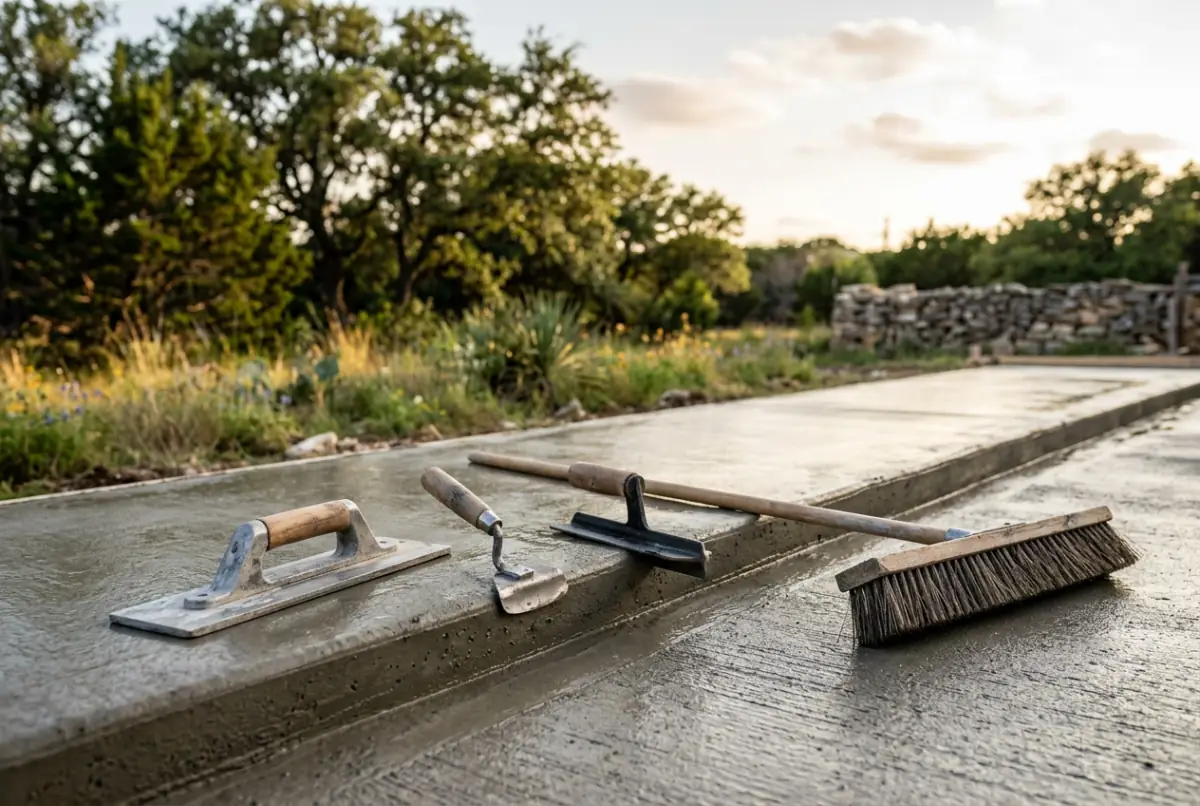
Get the cure plan in writing, next to the slab thickness and the mix. If the job includes the approach at the curb, that part sits on city land and has its own rules. Our driveway approach permit guide covers it. And if you're still pricing the job, our San Diego concrete cost guide shows where the money goes.
Quick Clarifications
How long should I wait to park my car on a new concrete driveway?
Wait 7 days for a normal car, and longer if your contractor says so. Park in the middle of the slab, away from the edges, for the first few weeks.
Can you drive on new concrete after 3 days?
Not with a car. A high early strength mix is only at about half its 28 day strength at 3 days, and a regular mix is lower still. Bikes and scooters are fine at 3 days.
How long before dogs can walk on concrete?
Keep pets off for at least the first 24 hours. Claws dig into a soft top and the prints stay. After a day, light paw traffic is the same as foot traffic.
Should I water my new concrete driveway?
Often yes, if no curing coat was sprayed on. Keeping concrete moist helps it gain strength. Ask your contractor first, and don't soak the soil along the edges.
When can I seal a new concrete driveway?
Concrete Network suggests about 30 days, once the mix water has had time to leave the slab. Ask what sealer fits your finish, since stamped and colored work often gets its own.
Search on Google? Add us and our concrete notes show up first.
Choose San Diego Concrete in Google's preferred sourcesNext in Line
- Concrete driveways in San Diego
- Stamped and decorative concrete
- Expansive clay soil and cracking
- What a concrete job costs here
Planning a new driveway in the City of San Diego? Ask us for a free written estimate, and ask for the cure plan in writing too.
Who Said So
Concrete Network, How Long Before You Can Drive on New Concrete (November 2026)
American Cement Association, Curing in Construction (November 2026)
Quikrete 5000 High Early Strength Concrete Mix spec data (November 2026)
Quikrete Concrete Mix No. 1101 data sheet (November 2026)
National Weather Service, Climate of San Diego, California, NOAA Technical Memorandum NWS WR-275 (November 2026)
Federal Highway Administration, Curing Practice for Slipformed Concrete Pavements (November 2026)